



The air conditioning and mechanical ventilation (ACMV) system is designed to provide cooling solutions by using air as the primary medium for heat exchange. This ensures thermal comfort, maintains good indoor air quality, and provides adequate ventilation in modern buildings. These systems are typically integrated with internal control mechanisms to maintain interior space temperatures within the desired comfort range, usually around 23 °C. One major concern for the ACMV system is ineffective energy management caused by high power consumption. The main cause of this problem is that the interior space temperature set point is maintained at a constant value across all time zones, without examining the impact of the air-side parameters for the ACMV system. The air-side parameters such as the ambient temperature, supply and return air temperatures and humidity ratio are often ignored when analyzing energy management to propose suitable energy conservation measures (ECM) for the ACMV system [1]. This is because the air-side parameters are considered a minor influence compared to water-side cycles in the chiller's operation [2]. In the ACMV system's controls and monitoring loop, the air-side parameters concern only the return and supply air temperatures in the AHUs. External factors outside the control loop, such as ambient temperatures and humidity, can affect power consumption too but are typically not included in the proposal of the ECM. Despite the availability of smart controls and automation for real-time monitoring and optimisation, the high investment cost remains a burden compared to traditional control systems [3]. The fastest and most effective way to reduce power consumption through ECM is by implementing zero-cost measures. The zero-cost measure is the initiative to reduce the power consumption of the system without additional cost [4]. This study proposes a zero-cost measure related to optimisation of the current condition of the ACMV system. The proposed zero-cost measure is to optimise return and supply air temperature settings in the ACMV system by taking into account ambient temperature, space air temperatures, and humidity. This approach focuses on developing a linear programming (LP) model aimed at minimising power consumption. The LP model is formulated by leveraging multiple linear regression (MLR) techniques from the historical data for power consumption and air-side parameters from the morning, afternoon, and late afternoon to produce accurate predictions about power consumption for the ACMV system.
This study is the extended version of the previously published paper on identifying the relationship between power consumption and air-side parameters [5]. In the previous paper, a strong correlation was observed between power consumption and air-side parameters for each time zone. This extended version expands the study by applying machine learning software to analyse the linear regression between power consumption and air-side parameters. The goal is to develop a predicted power consumption model with high squared correlations and low RMSE across all time zones. Additionally, further analysis is conducted to identify the optimal minimum power consumption and optimised return air temperature (RAT) and supply air temperature (SAT) by formulating a linear programming (LP) model based on the predicted power consumption model from the MLR technique. The abovementioned explanation of the expansion study in this paper contributes a clear distinction from previous research.
Table 1 provides the literature review summary on the method used for predicting and optimising power consumption considering air-side parameters of the ACMV system. The robust statistical method of multiple linear regression is utilised to predict interior space temperature and optimise heating strategies, resulting in a 43% improvement in thermal comfort with an adjusted R2 close to 0.9 [6]. In a similar study, cooling load prediction accuracy and efficiency are significantly enhanced using physics-based multiple linear regression (PB-MLR) models with a minimal mean absolute percentage error (MAPE) of 2.64% [7]. In a recent study, Zulkafli et al. [8] effectively uses piecewise linear and multiple linear regression models to estimate power consumption in ACMV systems, achieving high accuracy and demonstrating significant potential for electricity cost savings through optimisation models.
For the prediction model for power consumption, most of the studies use various machine learning techniques of artificial neural networks [9], deep learning [10], and particle swarm algorithm [11]. However, this study only focuses on finding the predicted power consumption without integrating with optimisation model to find optimal minimum power consumption and optimised air-side or water-side variables for the ACMV system. In another study, employing control strategies such as intelligent control models [12] and model predictive controls [13] shows a significant reduction in power consumption, despite the expensive nature of these mechanisms. For example, Wang W. et al. [14] show that a nonlinear model predictive control (MPC) strategy for Chiller-AHU systems optimises power consumption and reduces costs, achieving a 6.2% saving in total power consumption and a 12.3% reduction in electricity bills. Some studies the relationship between indoor air quality[15], occupancy levels [16], and humidity to significantly reduce power consumption and promote a more sustainable environment. For example, Anand et al. [15] reveals that implementing occupancy-based operational strategies for VAV systems can lead to significant energy savings, ranging from 19% to 38%, while maintaining acceptable Indoor Air Quality (IAQ). Piereci et al. compared energy performance using two different sets of standards, namely are European and Montenegrin standards. The European standard predicts more energy use, leading to higher carbon emissions for cooling than the other standard [17].
Literature review summary
Author |
Power Consumption |
Prediction |
Optimisation |
Ambient Condition |
Parameter |
||
|---|---|---|---|---|---|---|---|
Ambient T |
Humidity |
Air temperature |
|||||
Abdellat if M. et al. [6] |
Multiple Linear Regression |
✓ |
✓ |
✓ |
✓ |
x |
✓ |
Afroz Z. et al. [11] |
Particle Swarm Optimisation Algorithm |
✓ |
X |
✓ |
✓ |
✓ |
✓ |
Anand P. et al. [15] |
MATLAB |
X |
X |
X |
✓ |
X |
✓ |
Chen S. et al. [7] |
Multiple Linear Regression |
✓ |
X |
✓ |
✓ |
X |
✓ |
Lin et al. [9] |
Artificial Neural Network (ANNs) |
X |
X |
✓ |
✓ |
X |
✓ |
Matsuda et al. [10] |
MLR Deep neural networks (DNN) |
✓ |
X |
X |
X |
X |
✓ |
Saleem S. et al. [5] |
PWL and MLR |
X |
X |
✓ |
✓ |
✓ |
X |
Tien et al. [16] |
Deep learning |
✓ |
X |
X |
X |
✓ |
X |
Wang K. et al. [12] |
Support Vector Regression (SVR) |
✓ |
X |
✓ |
✓ |
X |
✓ |
Wang W. et al. [14] |
Nonlinear Model Predictive Control (MPC) |
✓ |
X |
X |
✓ |
✓ |
✓ |
Zulkafli et al. [8] |
Linear Regression |
X |
✓ |
✓ |
X |
X |
X |
The findings of this study highlight the importance of understanding the relationship between power consumption and air-side parameters to effectively prepare for and adapt to the impacts of ambient conditions. Although extensive literature exists on using machine learning or statistical analysis to predict and estimate power consumption based on various energy and environmental factors, only a limited number of studies have examined integrated parameters for predicting power consumption. Furthermore, there is a lack of research focused on developing an optimisation model to minimise predicted power consumption in air conditioning and mechanical ventilation (ACMV) systems.
The main aim of this study is to predict energy saving for air conditioning and mechanical ventilation (ACMV) system considering the correlation of power consumption with air-side parameters for different time zones. While numerous studies have focused on predicting power consumption for ACMV systems, there remains a significant gap in knowledge regarding the influence of air-side parameters to predict the power consumption. Such correlation is not thoroughly explored for air-side parameters in the ACMV system, including ambient temperature, air temperatures, and humidity ratios. The novelty of this study is divided into three main novelty domains on conceptual, methodological, and operational novelties for predicting energy saving for ACMV system:
Conceptual novelty – prediction on future and optimal minimum power consumption based on optimised return and supply air temperatures considering the influence of ambient temperature and humidity ratio for different time zones. The achievable optimal minimum power consumption sets a clear benchmark for predicting energy saving of ACMV system.
Methodological novelty – establishment of a linear programming model formulation from the multiple linear regression training analysis for determining the optimal minimum power consumption for each time zone.
Operational novelty – utilisation of advanced machine learning software to predict power consumption and a state-of-the-art optimisation tool for developing a linear programming model to minimise power consumption for ACMV system.
ACMV system components
Methodological framework for predicting energy saving for ACMV system
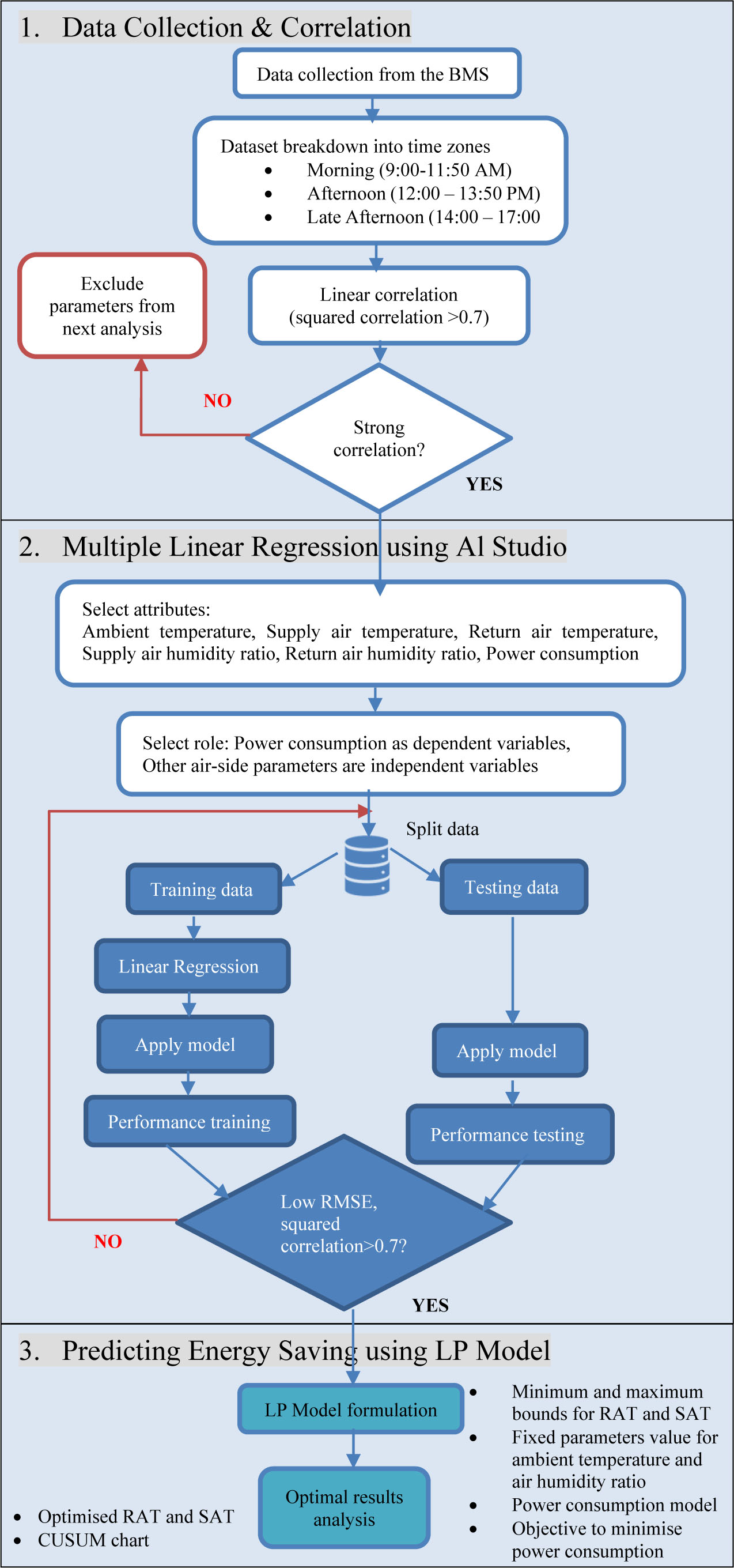
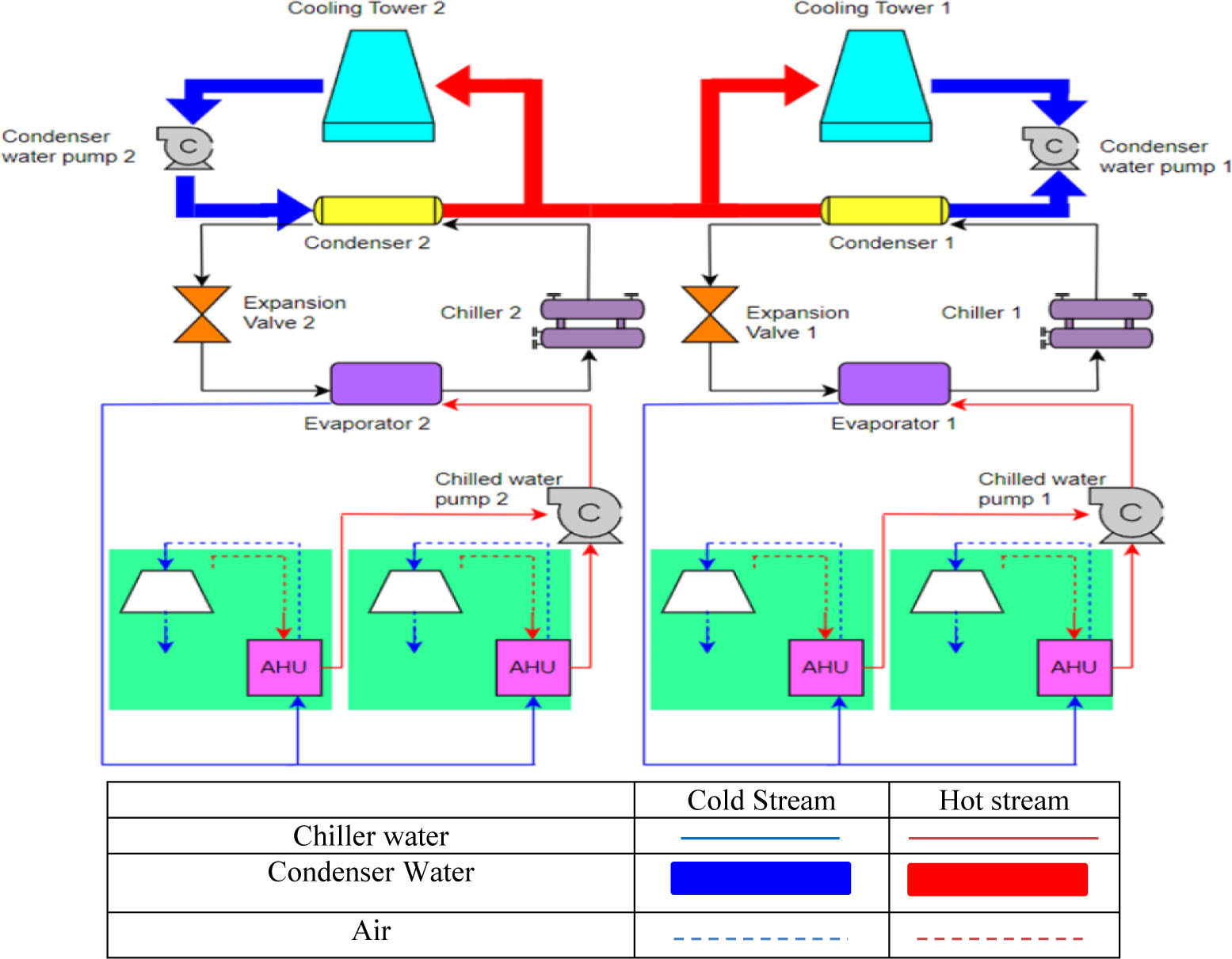
Figure 1 shows the ACMV system, which includes two chiller units, two cooling towers, and 17 AHUs in a 5-story academic building. The ACMV system distributes its 17 AHUs across the building as follows: i) 5 AHUs on the lower ground floor; ii) 3 AHUs on the ground floor; iii) 2 AHUs on Level 1; iv) 2 AHUs on Level 2; v) 2 AHUs on Level 3; and vi) 3 AHUs on the rooftop. It features three material cycles: the chilled water cycle for cooling, the condensed water cycle for rejecting heat to the ambient air, and the indoor air cycle in the AHUs for regulating temperatures and improving ventilation within the building.
The methodological framework for predicting energy saving for ACMV system by considering air-side parameters of the AHU system is displayed in Figure 2. The air-side parameters under study are the ambient temperature, return, and supply air temperatures, and return and supply air humidity ratio. The methodology for this study consists of three main stages. The first stage involves data collection and correlation between the power consumption and air-side parameters. The second stage focuses on multiple linear regression (MLR) analysis to find coefficients for air-side parameters that define the relationship with power consumption in a single model equation. Finally, the third stage predicts energy savings using a linear programming (LP) model.
In the initial stage, historical air-side parameters such as ambient temperature, return air temperature, and supply air temperature are gathered from the building management system (BMS). A power logger is employed to collect data on power consumption. The dataset is collected over a period of two weeks, with recordings taken at 10-minute intervals. To measure supply and return air humidity ratios, an air sensor is utilised to record the humidity ratio for each AHU and for each time zone. There are 17 AHU units in the academic building involved in this study. The correlation analysis is done between the power consumption and the air-side parameters to find if a strong correlation exists for each time zone in the morning, afternoon, and late afternoon. If the correlation is weak with R-squared less than 0.7, the respective air-side parameters will be excluded from the next stage.
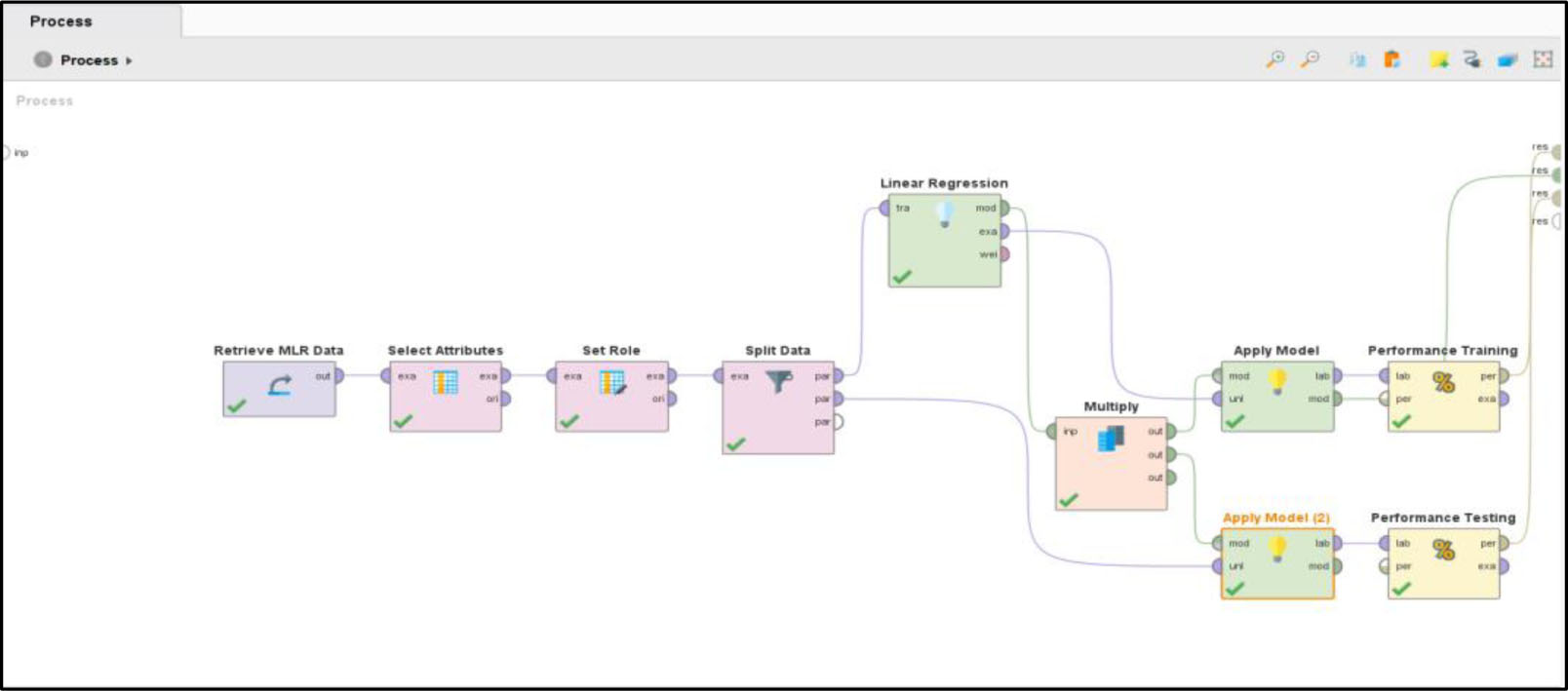
In the second stage, the predicted power consumption model is developed using multiple linear regression (MLR) analysis. The MLR analysis is performed using Altair AI Studio, which is a visual, drag-and-drop machine learning software. A single model is created that represents the predicted power consumption based on the coefficient values of the air-side parameters. The dataset is split into two types of data, namely the training data and the testing data. The process involves selecting strongly correlated data as the training data and weakly correlated data as the testing data. A linear regression model is applied to the training data, which demonstrates a high squared correlation and a low RMSE compared to the testing data. In other words, the training data is the important data to consider for multiple linear regression (MLR), while the testing data is considered insignificant.
The linear programming model (LP) is formulated to solve the optimisation problem of identifying the minimum predicted power consumption for ACMV system considering independent air-side parameters such as ambient temperature, supply, and return air humidity ratios for three different time zones. The LP model is designed to determine the optimised RAT and SAT for three different time zones while minimising the predicted power consumption of the system. The LP model assumes that the selected air-side parameters are the dominant factors affecting the power consumption and other potential influences such as occupancy, heat loss are negligible. It is assumed that the developed LP model can be generalized to other similar ACMV system in various types of buildings for a broader optimisation application. The generalizability of the LP model is characterized by the scalable formulation, as the objective function and constraints are expressed in a general form. The linear LP model consists only of continuous variables and parameters. For easy reference, symbols for continuous decision variables are represented in capital Roman letters, while parameters are denoted using small Roman or Greek letters. This will be achieved by using a multiple linear regression model to predict minimum power consumption while establishing minimum and maximum bounds for both RAT and SAT. The simple linear programming model is solved using advanced optimisation software called General Algebraic Modelling System (GAMS) v38.2.1 until it reaches optimality. The model formulation that is designed for this study is discussed in the following section.
The objective function refers to the main goal of the model formulations, which is to identify the minimum predicted power consumption for the ACMV system. The equations for objective function are shown in eq. (1):
Eq. (2) shows the power consumption model from the MLR analysis. For every time point, the return air temperature (
Eqs. (4) and (5) display the minimum and maximum bounds for return and supply air temperatures. The bounds are obtained from historical data for three different time zones: morning, afternoon, and late afternoon.
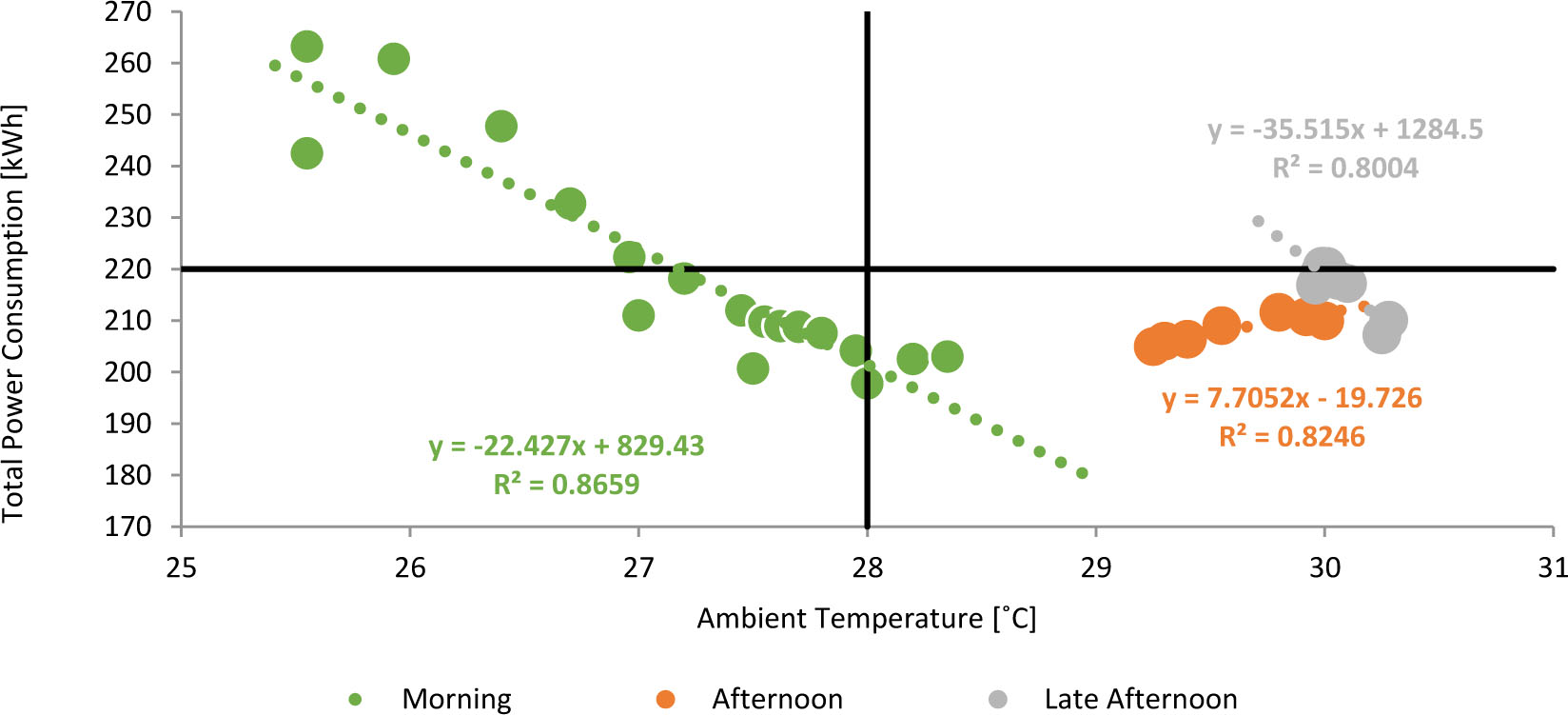
This study focuses on estimating the power consumption of the ACMV system by identifying the correlation of power consumption with the air-side parameters in the AHU system for different time zones, namely in the morning, afternoon, and late afternoon. The identified air-side parameters focused on the AHU system include the SAT, RAT, return air humidity ratio, and supply air humidity ratio. The linear function finds correlations between power consumption and air-side parameters. The strong correlation trend is indicated by obtaining an R2 greater than 0.7. The trend demonstrates how the air-side parameters affect the ACMV system's power consumption. The figure is divided into four quadrants to represent the correlation at different times of the day: morning (08:00-11:50), afternoon (12:00-14:00), and late afternoon (14:10-17:00). In the data distribution graph, morning is represented by green, afternoon by orange, and late afternoon by grey.
Figure 3 displays the correlation of total power consumption with the SAT. SAT refers to the temperature of air being delivered into the space for cooling from the vent of ACMV system. According to Figure 1, a low SAT value does not necessarily indicate high power consumption. The majority of value points are found in the third quadrant (i.e., bottom-left corner). A strong positive correlation is noted in the morning and late afternoon with an R2 of 0.8264 and 0.785, respectively, while a strong negative correlation is present in the afternoon with an R2 of 0.785. High power consumption is observed in the morning to start up the system at high SAT. As the ACMV system continues its operations until it reaches a steady condition, the SAT reduces to the desired temperature ranges, and so does the power consumption.
Total power consumption trends with supply air temperature
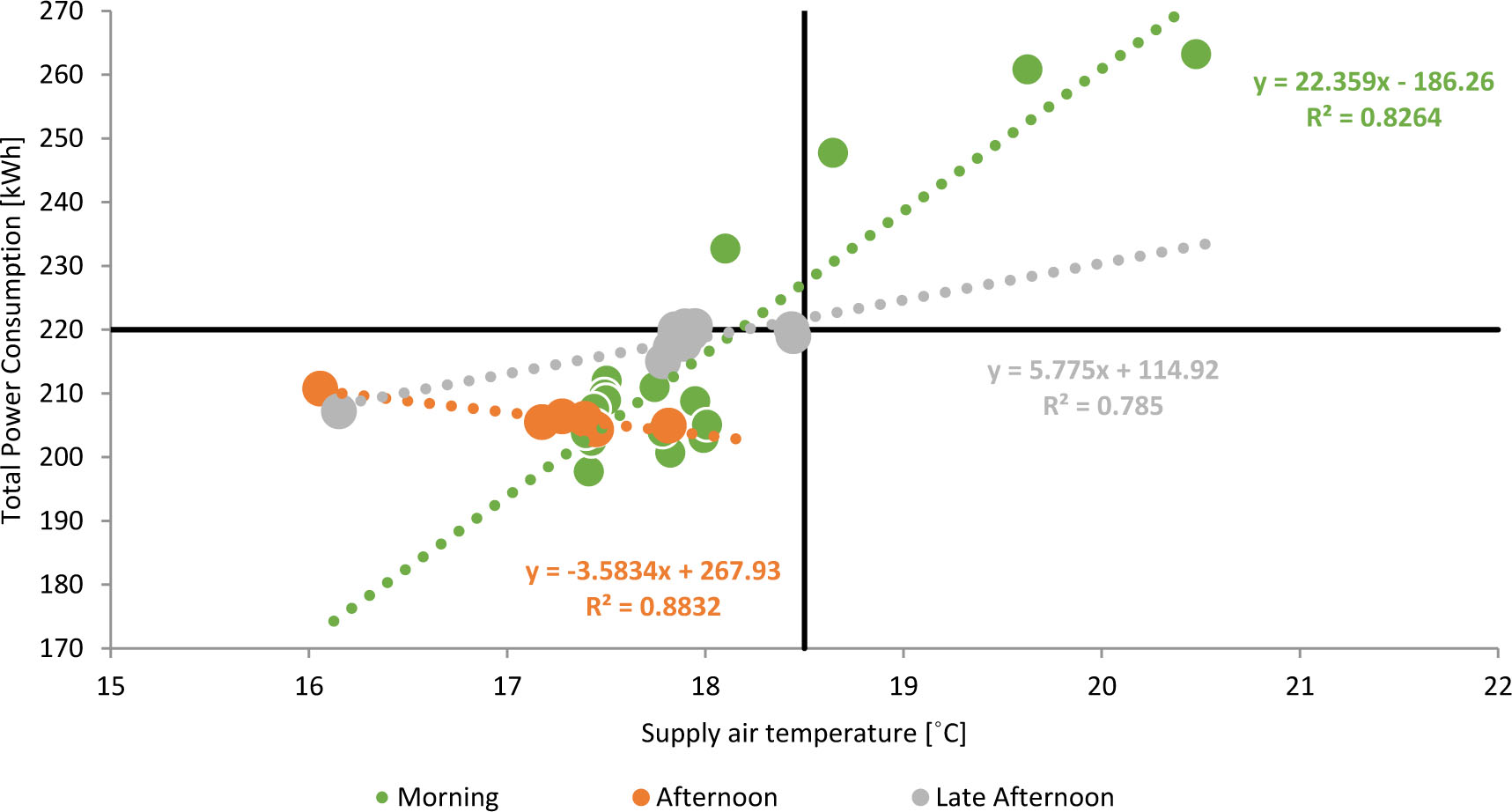
Figure 4 shows the correlation of power consumption with return air temperature (RAT). RAT refers to the temperature of air being returned from the cooling space to the vent of the ACMV system. Similar to Figure 1, most of the value points for power consumption versus RAT in Figure 2 are in the third quadrant. It is observed that a strong positive correlation with R2 of 0.9025 and 0.8176, respectively in the morning and late afternoon, and a strong negative correlation in the afternoon with R2 of 0.862. The air conditioning operation starts early in the morning, leading to high power consumption during starts up at a higher return air temperature. After a few hours of operation, the return air temperature continues to drop, as does the power consumption. In the afternoon, the RAT remains around 21.5 °C to 22 °C at lower power consumption as the air conditioning system reaches a steady condition. In the late afternoon, power consumption increases slightly to maintain the RAT within the desired range.
Total power consumption trends with return air temperature
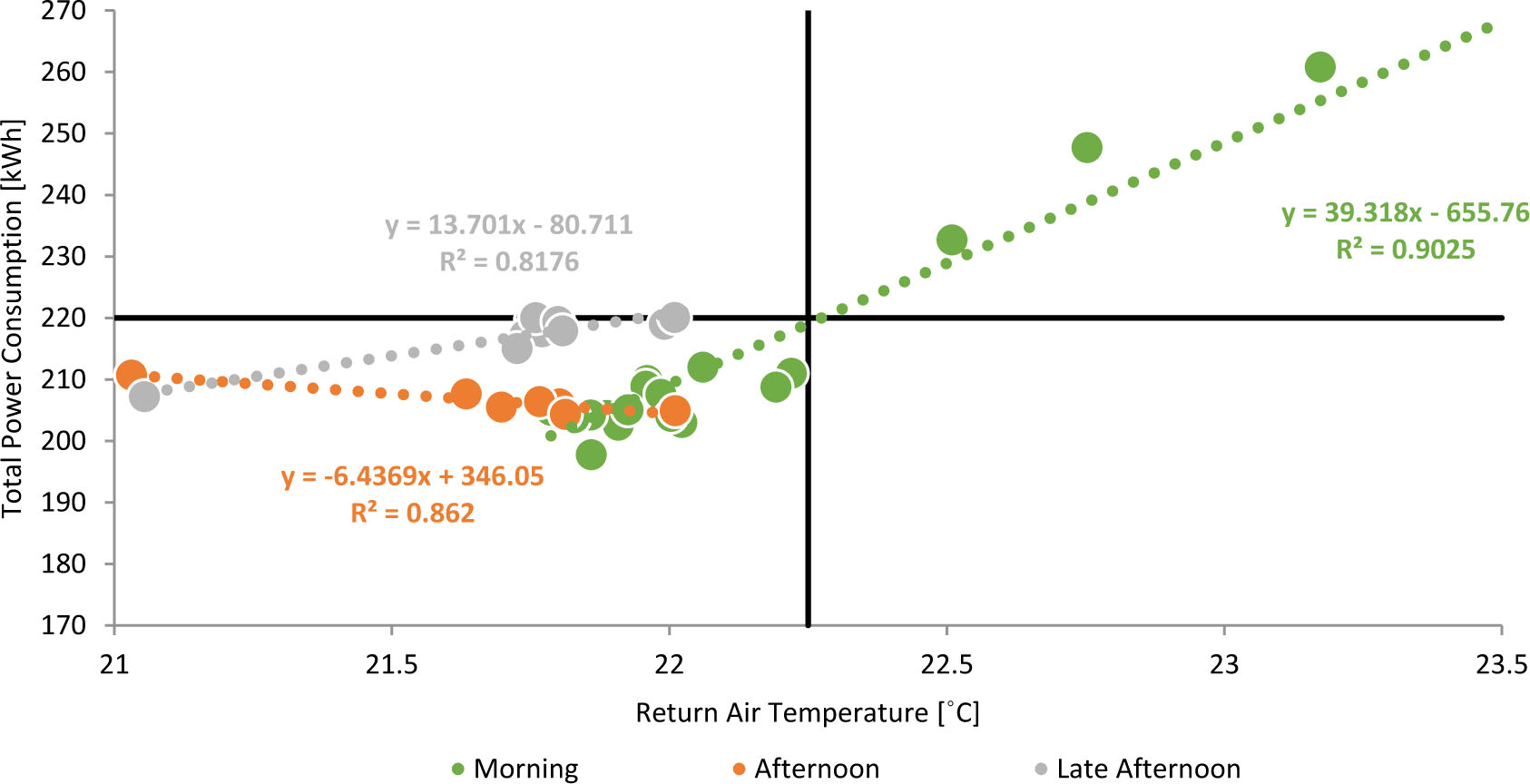
Figure 5 displays the correlation of power consumption with the supply air humidity ratio. The supply air humidity ratio refers to the humidity ratio of the air in a supply duct of the AHU system that supplies cool air to the cooling space. Similar to Figure 1 and Figure 2, the correlation trends are the same. There was a strong positive correlation in the morning and late afternoon with an R2 of 0.7629 and 0.834, respectively, while a strong negative correlation in the afternoon with an R2 of 0.7211.
Total power consumption trends with supply air humidity ratio
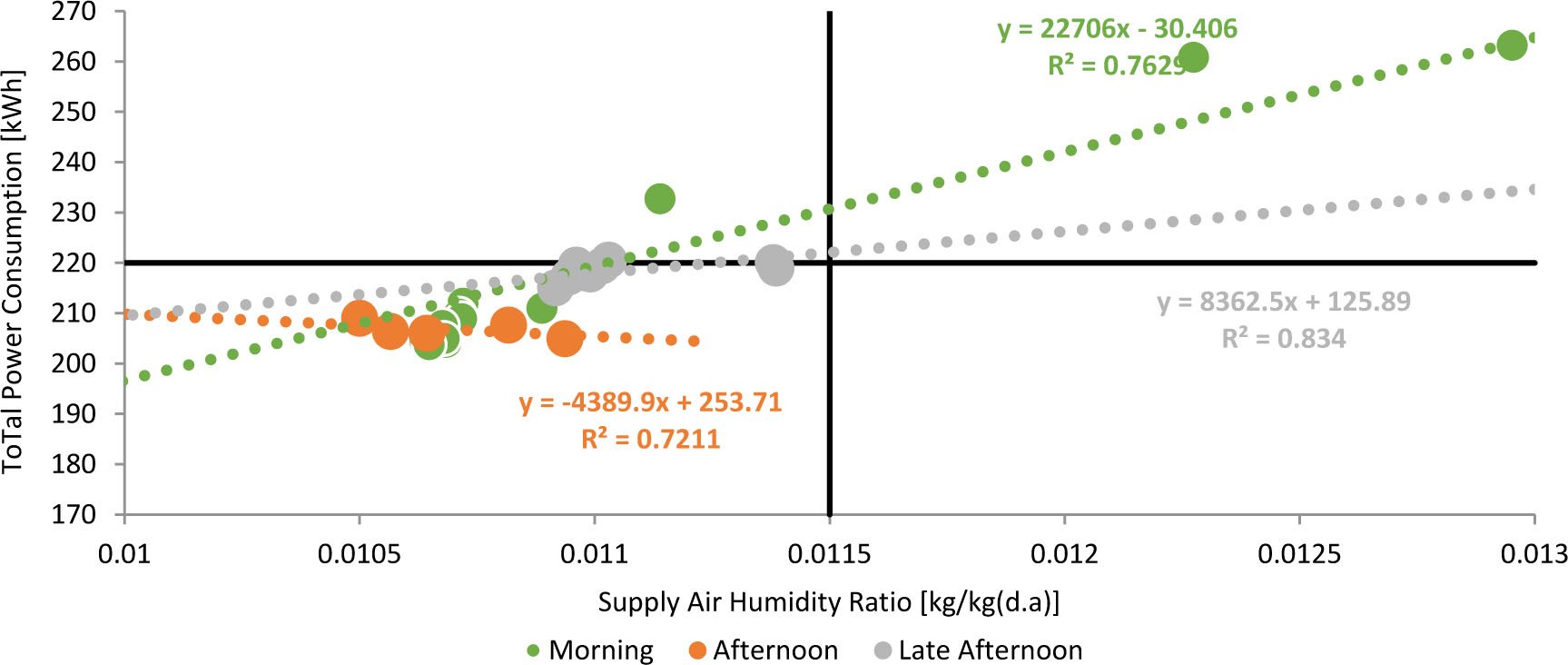
Figure 6 displays the correlation of power consumption with the return air humidity ratio. The return air humidity ratio is the moisture content of the air in a return vent that is drawn from the cooling spaces to the AHU system. There is a significant positive correlation between power consumption and return air humidity ratio in the morning with an R2 value of 0.9017. This indicates that as the return air humidity ratio increases, power consumption also rises significantly in the early morning during the start-up of the system. In the afternoon, a strong negative correlation with an R2 value of 0.8832. When the air conditioning system operates consistently, lower power consumption is observed within a specific range of return air humidity ratios. In the late afternoon, there is a strong positive correlation with an R2 value of 0.8634, indicating a slight increase in power consumption.
Total power consumption trends with return air humidity ratio
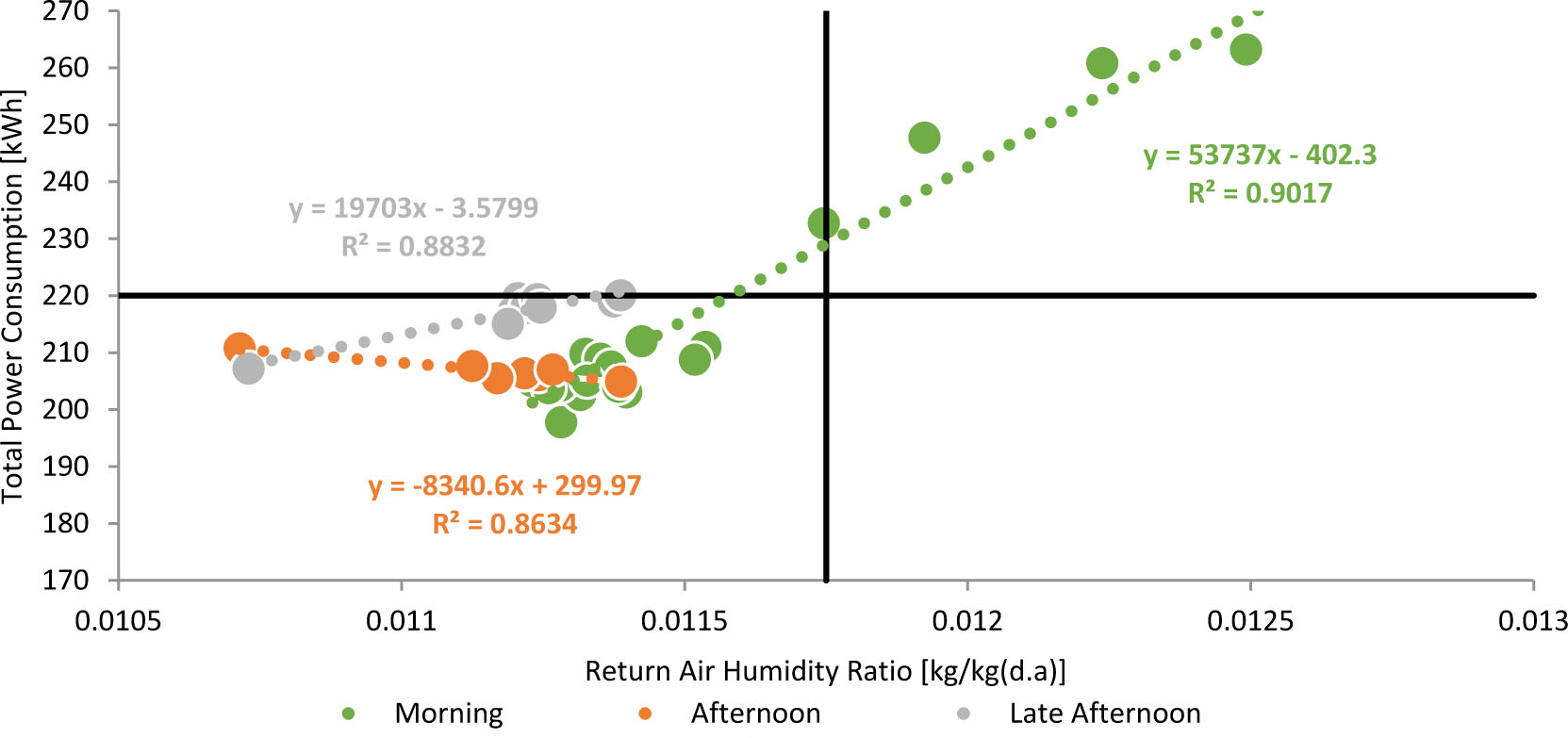
Figure 7 shows total power consumption with ambient temperature. In the morning, a strong negative correlation is displayed with an R2 of 0.8659 due to high power consumption recorded during operation start-up at lower ambient temperature in the early morning. As the ambient temperature starts to rise, the power consumption is lower when the operation reaches steady condition. In the afternoon, a strong negative correlation is observed as the ambient temperature continues to increase until it reaches a peak of around 30 to 31°C, while power consumption increases slightly. The strong positive correlation, with an R2 value of 0.8004, was observed in the late afternoon when the ambient temperature slightly decreased, leading to a reduction in power consumption.
Total power consumption trends with ambient temperature
The statistical technique used to predict the outcome of the variable based on the value of two or more variables is known as Multiple Linear Regression (MLR). The prediction of the dependent variable is based on two or more explanatory variables. Air-side parameters are considered explanatory variables in an air conditioning system, while power consumption is the dependent variable. The five air-side parameters in this study include the SAT, RAT, supply humidity ratio, return humidity ratio, and ambient temperature. The data science tool known as Altair Al Studio 2024.1.0 is designed for creating machine learning models and features a visual drag-and-drop workflow for interactive data pre-processing capabilities. In this study, the linear regression tool was used. Figure 8 shows the process workflow for using the MLR model in Altair Al Studio 2024.1.0.
Process workflow using MLR model in Altair Al Studio 2024.1.0
MLR Results for three different time zones
Morning |
Afternoon |
Late afternoon |
|
|---|---|---|---|
Performance Training |
|||
Squared correlation (R2) |
0.941 |
0.831 |
0.914 |
Root mean squared error (RMSE) |
4.310 |
1.692 |
1.350 |
Coefficients |
|||
Ambient temperature (β1) |
6.834 |
-36.106 |
10.114 |
Return air temperature (β2) |
88.931 |
-79.277 |
148.049 |
Return air humidity ratio (β3) |
-8819.770 |
-16.120 |
72.804 |
Supply air temperature (β4) |
-37.335 |
26.886 |
-62.449 |
Supply air humidity ratio (β5) |
24643.268 |
590.832 |
452.051 |
Intercept (β0) |
-1447.490 |
2520.860 |
-2197.472 |
Table 2 shows the MLR results for three different time zones: morning, afternoon, and late afternoon. The purpose of segregating the operational time of the ACMV system into three distinct time zones is to achieve a higher squared correlation of over 0.7 and a lower RMSE. Table 2 demonstrates the strong performance of MLR analysis in terms of squared correlation and RMSE during MLR training analysis. A high R2 value signifies a strong fit of a model to the data, indicating that the model accounts for a substantial amount of variability in the dependent variable based on the independent variables. The highest squared correlation was observed in the morning at 0.941, followed by the late afternoon at 0.914, and in the afternoon at 0.831. Low RMSE indicates that the predicted values from a regression model are close to the actual values in the dataset, meaning a better model fit. For RMSE, the lowest value is in the late afternoon at 1.35, followed by the afternoon at 1.692, and finally the morning at 4.310.
In MLR analysis, Table 2 illustrates the coefficients to identify the relationship between the explanatory variables and the power consumption as the dependent variable. The coefficients identify the interactions and relationships among independent variables that can influence the predicted dependent variable. The mathematical expression for MLR is shown in eq. (6):
The Appendix is provided for data used for calculation for predicted power consumption.
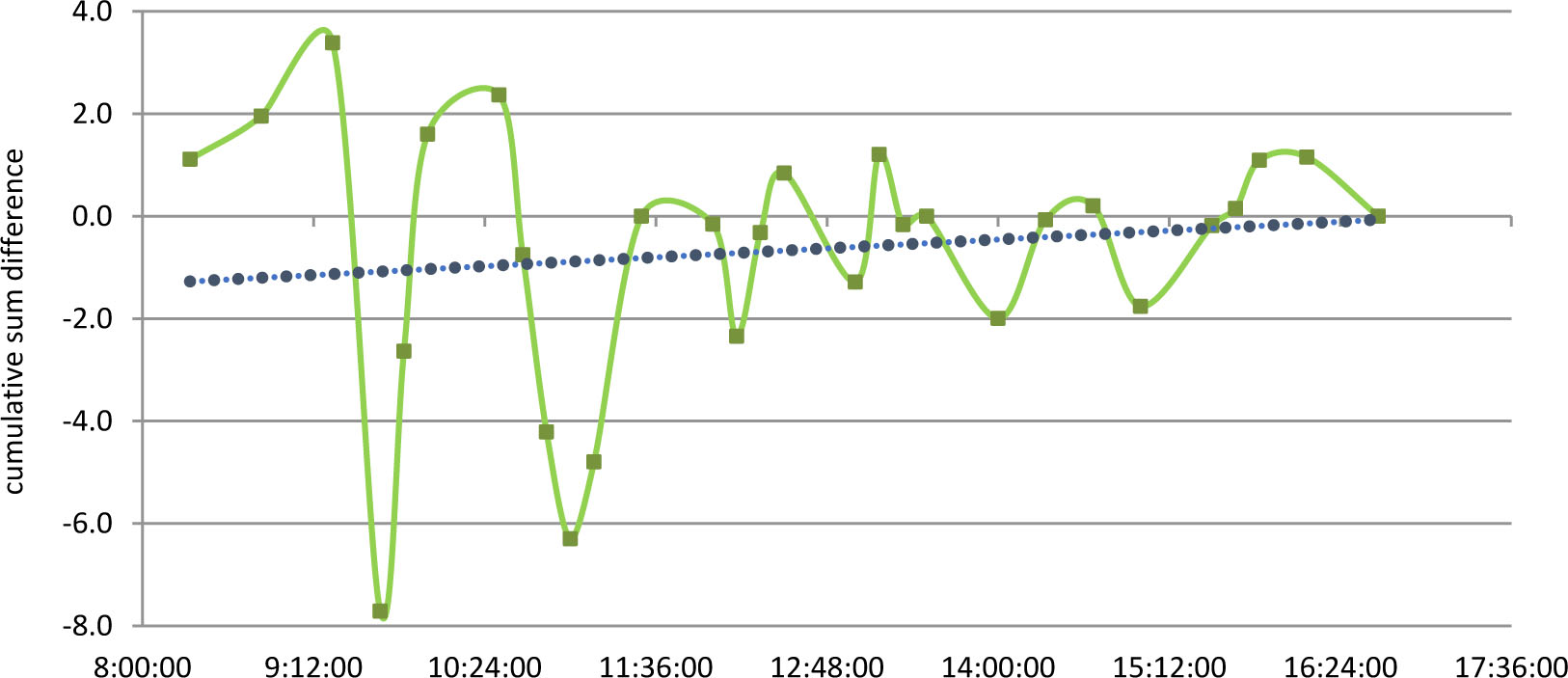
Another graphical technique for analysing power consumption is the cumulative sum chart (CUSUM). The CUSUM chart tracks power consumption performance and quantifies both saved and wasted power consumption. Figure 9 indicates the cumulative sum of the difference in power consumption between actual and predicted power consumption that randomly fluctuates around zero level. A cumulative sum chart (CUSUM) is a type of control chart designed to detect deviations of individual values or subgroup means from a specified target value. The CUSUM chart illustrates an increasing trend in the cumulative sum of the differences, indicating that energy is being wasted in the operation of the ACMV system. This result suggests opportunities for saving power consumption through energy conservation measures (ECM). One potential energy-saving strategy for an ACMV system is optimising its operation by applying the concept of air temperatures reset. The temperature reset is done by changing the set point of an indoor space temperature control loop based on an indicator that is not part of the control loop. For example, the ambient temperature and humidity ratio can be used as the indicators to reset the space temperature set point for achieving energy saving for ACMV system.
CUSUM chart for predicted power consumption compared with actual power consumption
The proposed energy conservation measure (ECM) focuses on optimising decision variables to minimise power consumption. Table 3 presents the summary of the model's statistical results for the validation of the optimality of the optimisation model. The linear model (LP) is formulated to aim to obtain minimum predicted power consumption for the ACMV system, considering the air-side parameters of the AHU system. The LP model is written in GAMS v38.2.1 and solved by a CPLEX solver at a zero-optimality gap using an Intel(R) Core (TM) i7. Table 3 shows the model statistics for three different time zones with non-zero elements around 81 to 121 with single variables around 30. The model's status across all time zones is optimal, with extremely rapid generation times of less than one second. This optimal model status proves the validity and feasibility of the optimisation model framework; otherwise, it results in an infeasible outcome.
Model statistic for LP model for different time zone
Model statistic |
Morning |
Afternoon |
Late afternoon |
|---|---|---|---|
Non zero elements |
121 |
81 |
91 |
Single variables |
37 |
25 |
28 |
Model status |
Optimal |
Optimal |
Optimal |
Generation time (seconds) |
0.015 |
0.016 |
0.016 |
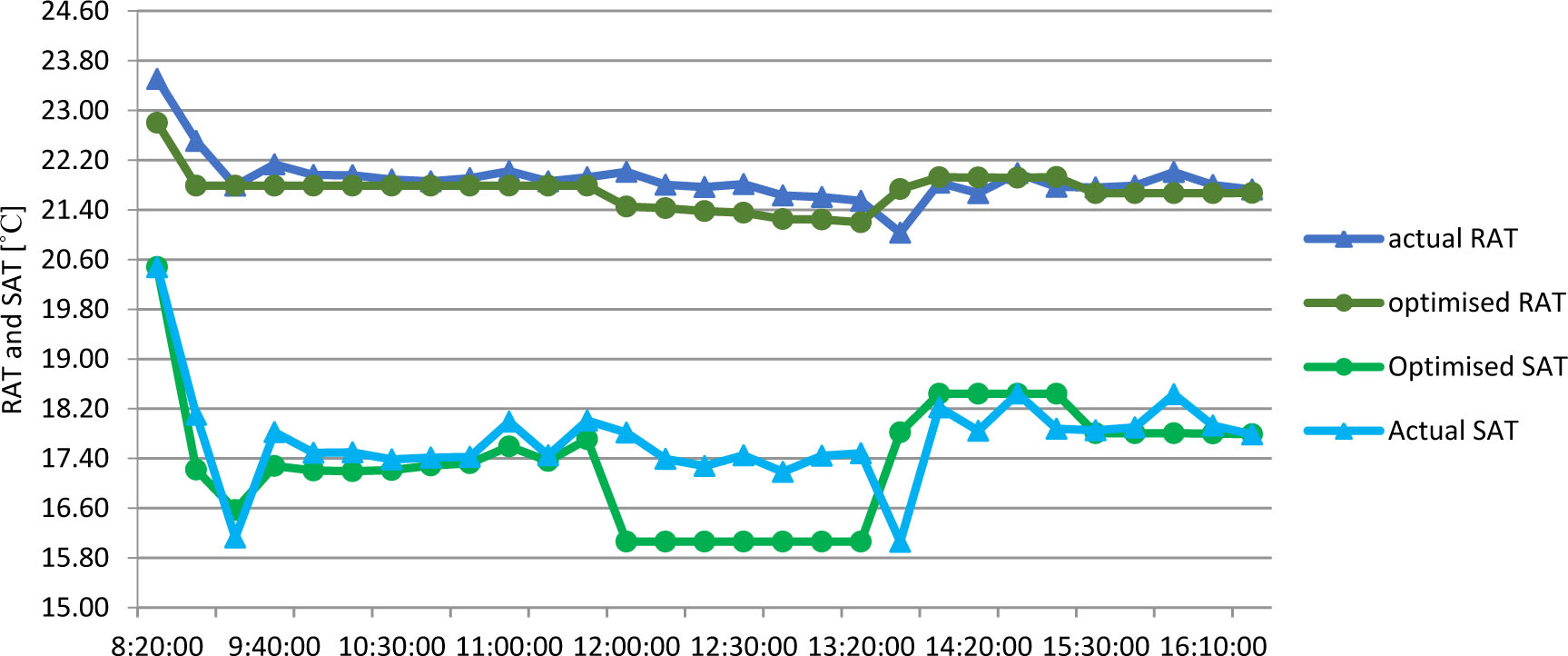
In this model, the SAT and RAT are designated as the decision variables, while parameters such as ambient temperature, return air humidity ratio, and supply air humidity ratio remain fixed. SAT and RAT are selected as decision variables because they are control parameters that can be adjusted to achieve optimal results toward minimising power consumption. For instance, SAT can be adjusted by regulating airflow using air volume dampers in the AHU. The AHU uses a supply fan to circulate cold air into the indoor space through the supply duct. The speed of the fan can be modified using a variable speed drive. Table 4 illustrates the average optimal results for the optimised RAT and SAT. From the optimal results, SAT is higher in the late afternoon compared to the morning and afternoon with higher minimum predicted power consumption. The optimised RAT maintains a consistent temperature of 21 °C aross all time zones.
Generally, a higher or lower SAT is influenced by the cooling coil that provides cold air by exchanging its heat with the chilled water in the chiller. The fan in the AHU needs to decrease or increase the speed to provide sufficient airflow to the indoor space to ensure the ACMV system can deliver the same amount of cooling. If the SAT is lower than the optimised value because more heat is being absorbed by the chilled water, the fan speed in the AHU should be adjusted to align with the optimised SAT. This adjustment will lead to achieving minimum power consumption.
The indoor space temperature reset is achieved by adjusting the indoor temperature using the optimised RAT. The ACMV system controls the indoor temperature based on return air temperature sensors. The system continues to cool the room until the RAT matches the desired setpoint temperature. The optimal minimum power consumption establishes the lowest acceptable benchmarks for power consumption determined by an optimisation process without violating any constraints, determined by optimised RAT and SAT with the influence of ambient temperature and humidity. It is important to note that any power consumption below this threshold is considered infeasible.
Average optimised RAT and SAT at optimal minimum power consumption
Average optimal results |
Optimised RAT [°C] |
Optimised SAT [°C] |
Optimal minimum power consumption [kWh] |
|---|---|---|---|
Morning |
21.87421 |
17.53 |
200.27 |
Afternoon |
21.38018 |
16.28 |
202.25 |
Late afternoon |
21.76456 |
18.04 |
208.13 |
Figure 10 clearly illustrates the differences between the optimised values and the actual values of SAT and RAT across all time zones. Generally, the optimised SAT and RAT values are lower than the actual values. However, both the actual and optimised values of SAT and RAT exhibit a similar pattern throughout the different time zones. This consistency indicates that the optimised SAT and RAT fall within the allowable range of values, further confirming the effectiveness of the optimisation results.
Actual and optimised SAT and RAT
To further verify the effectiveness of the optimisation linear programming (LP) model, a CUSUM chart as in Figure 11 is plotted to display the cumulative sum of the differences between minimum power consumption and predicted power consumption. The downward trend in the cumulative sum difference indicates that energy is being saved compared to the predicted power consumption, which means that the actual power consumption of the ACMV system is lower than the predicted power consumption for the same amount of cooling demand. Implementing an air temperature reset for the RAT and SAT based on the optimised values outlined in Table 2 for each time zone will effectively result in significant energy savings.
CUSUM chart for optimal minimum power consumption compared with predicted power consumption
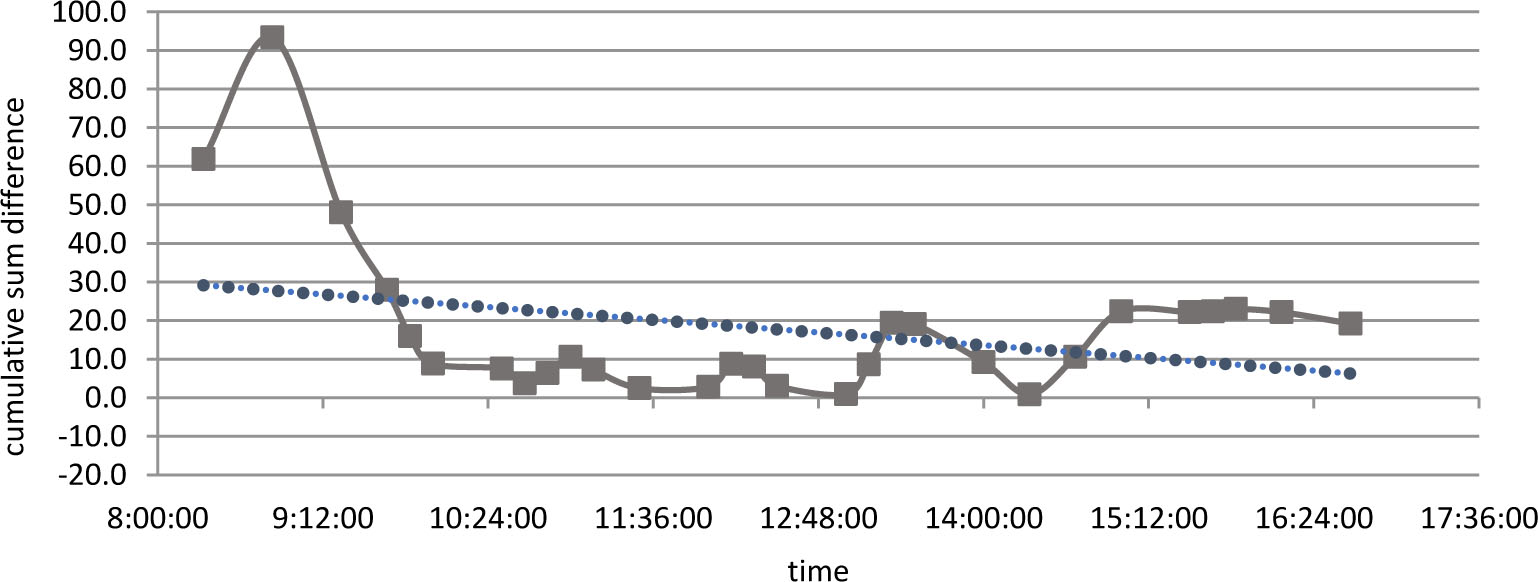
Figure 12 displays the final result of the comparison analysis between the power consumption trends for the actual, predicted, and optimal predicted values across all time zones. Using eq. (1), the predicted power consumption is plotted alongside the actual power consumption. The predicted power consumption profile closely follows the actual profile, with an average difference of about 2 kWh for each time point. The total RMSE between the actual and predicted power consumption is around 3, which is considerably low. The objective of obtaining predicted power consumption that closely matches actual power consumption is to accurately estimate power consumption based on the coefficients and actual values of the independent variables and the intercept, as illustrated in eq. (1) and Table 2.
Optimal minimum power consumption compared with predicted and actual power consumption
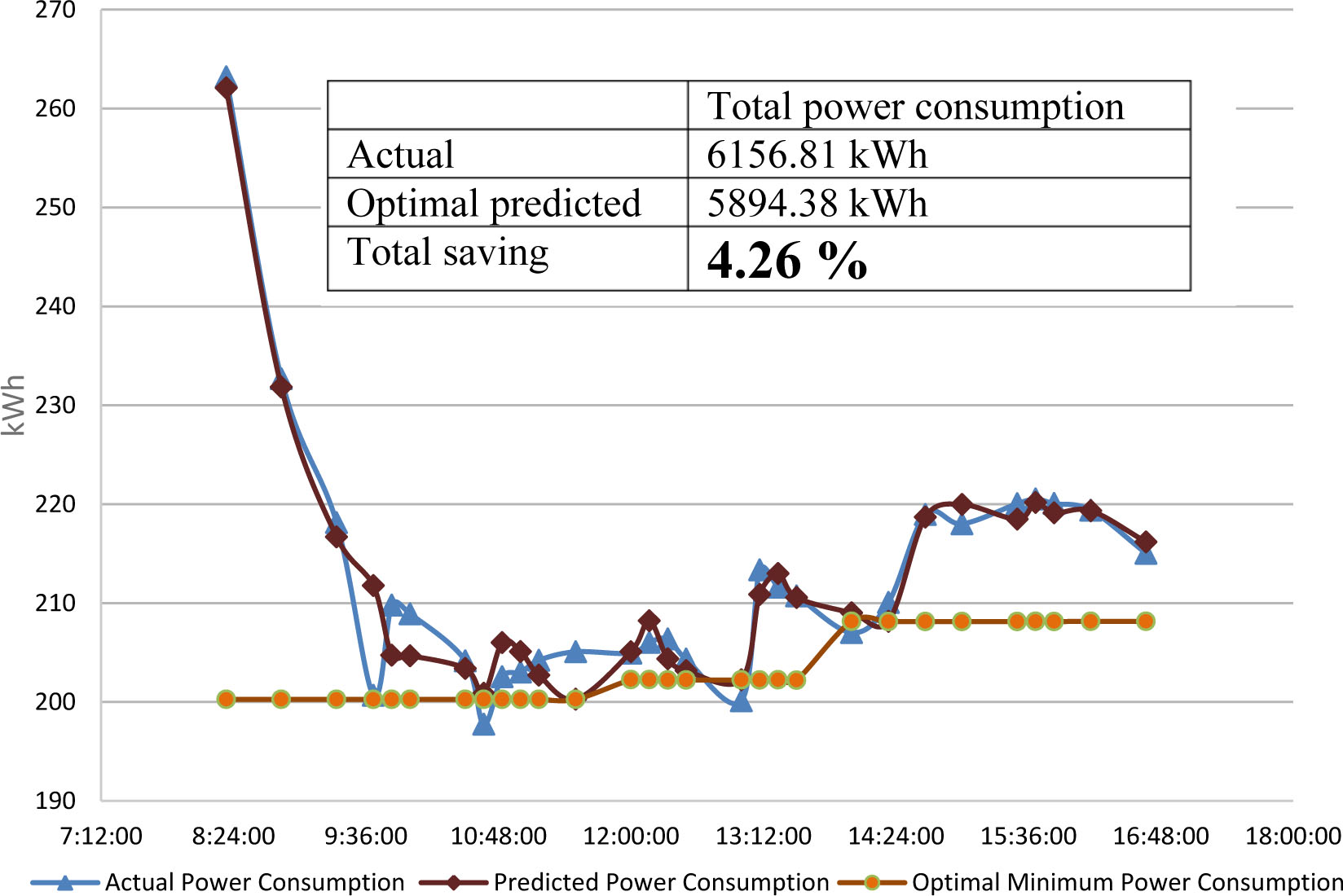
The observed difference between the optimal predicted power consumption and the actual and predicted trends can be addressed by recognizing that the minimum and maximum bounds for power consumption remain consistent within each time zone. Understanding this relationship can enhance predictions and align trends with actual power consumption by adjusting the minimum and maximum bounds for each time point. The daily energy savings from implementing optimised RAT and SAT based on the optimal solution (see Table 4) are approximately 4.26%. This savings amount is significant for the daily operation of the ACMV system. To contextualize the observed 4.26% daily energy saving, similar studies in the field is reviewed. For instance, Wang W. et al. [14] reported a 6% reduction using MPC method, while Zheng M. [18] achieved 4% under heating demand forecasting. Compared to these, this result is within a comparable range, suggesting the effectiveness of the approach.
The proposed study aims to predict future total energy savings by incorporating a MLR equation for power consumption in relation to air-side parameters into the linear programming model. The aim is effectively accomplished by achieving energy savings through the implementation of an optimised air temperature setting for the ACMV system. The important results are underscored in the following key points:
The analysis of the MLR training shows a strong correlation, with a squared correlation coefficient exceeding 0.7, between power consumption and five types of air-side parameters. Specifically, ambient temperature, return air temperature, supply air temperature, return humidity ratio, and supply humidity ratio significantly influence power consumption across all time zones: morning, afternoon, and late afternoon. Additionally, the model demonstrates a better fit, as indicated by the significantly low values of the RMSE across all time zones.
The cumulative sum difference (CUSUM) chart for predicted and actual power consumption shows an increasing trend, which suggests opportunities for saving power consumption through energy conservation measures (ECM). The proposed ECM is applying the air temperature reset of return and supply air temperatures (RAT and SAT) for ACMV system.
The optimised RAT and SAT are determined using a linear programming (LP) model that takes into account the minimum and maximum limits for air temperatures, as well as the predicted power consumption from a MLR training analysis. The optimal results indicate that the optimised SAT is approximately 17 °C to 18 °C, while the optimised RAT remains consistently at 21°C across different time zones.
Implementing a reset for the RAT and SAT based on optimisation results will lead to significant energy savings of approximately 4.26% per day of ACMV operation.
In general, the proposed energy conservation measure (ECM) by applying the air temperature resets for RAT and SAT according to optimised values in different time zones. This approach serves as a guideline for building owners to save more electricity bills while at the same time satisfying the cooling requirement and thermal comfort of the building. The presented work can be expanded for a better representation of real-life scenarios and propose more accurate solutions for the efficient operation of the ACMV system:
The other independent parameters for the cooling towers that may influence power consumption can also be considered such as the supply and return condensed water temperature in cooling towers, air mass flow rate, and cooling tower effectiveness.
Different minimum and maximum values for air temperature and humidity ratio should be considered for each time point in the optimisation model. This approach will result in a more accurate analysis of future predicted power consumption by accounting for the influence of ambient conditions. The most effective way to minimise power consumption is by conducting an on-site demonstration. This involves adjusting the air set point temperatures based on the optimised decision variables derived from linear programming solutions. Throughout the operation of the ACMV system, power consumption should be monitored to assess the impact of these adjustments.
The LP model can be enhanced into a more robust framework by incorporating stochastic modeling techniques to account for uncertainties such as seasonal fluctuations and weather conditions for different types of buildings, using known probability distributions for these uncertain factors.
The authors would like to acknowledge Universiti Teknikal Malaysia Melaka for giving financial and research support through the Short Term Research Grant (PJP/2021/FKM/S01809).
- ,
“Nationwide savings analysis of energy conservation measures in buildings,” ,Energy Convers Manag , Vol. 188 , :1-182019, https://doi.org/10.1016/J.ENCONMAN.2019.03.035 - ,
“The role of power consumption and type of air conditioner in direct and indirect water consumption,” ,Journal of Sustainable Development of Energy, Water and Environment Systems , Vol. 6 (4), :665-6732018, https://doi.org/10.13044/j.sdewes.d6.0202 - ,
“Comparing the life cycle costs of a traditional and a smart HVAC control system for Australian office buildings,” ,Journal of Building Engineering , Vol. 91 , 2024, https://doi.org/10.1016/j.jobe.2024.109686 - ,
“Strategies for reducing energy consumption in a student cafeteria in a hot-humid climate: A case study,” ,Journal of Sustainable Development of Energy, Water and Environment Systems , Vol. 1 (1), :14-262013, https://doi.org/10.13044/j.sdewes.2013.01.0002 - ,
“Multiple Linear Model Analysis of Indoor Air Quality for Air Conditioning System in Office Building,” ,Chemical Engineering Transactions , Vol. 113 , :127-1322024, https://doi.org/10.3303/CET24113022 - ,
“A thermal control methodology based on a machine learning forecasting model for indoor heating,” ,Energy Build , Vol. 255 , 2022, https://doi.org/10.1016/j.enbuild.2021.111692 - ,
“An online physical-based multiple linear regression model for building’s hourly cooling load prediction,” ,Energy Build , Vol. 254 , 2022, https://doi.org/10.1016/j.enbuild.2021.111574 - ,
“Performance analysis and optimisation of the chiller-air handling units system with a wide range of ambient temperature,” ,Clean Eng Technol , Vol. 14 , :1006432023, https://doi.org/10.1016/j.clet.2023.100643 - ,
“Balancing thermal comfort and energy conservation– A multi-objective optimization model for controlling air-condition and mechanical ventilation systems,” ,Build Environ , Vol. 219 , 2022, https://doi.org/10.1016/j.buildenv.2022.109237 - ,
“Development of a prediction model tuning method with a dual-structured optimization framework for an entire heating, ventilation and air-conditioning system,” ,Sustain Cities Soc , Vol. 79 , 2022, https://doi.org/10.1016/j.scs.2022.103667 - ,
“Predictive modelling and optimization of HVAC systems using neural network and particle swarm optimization algorithm,” ,Build Environ , Vol. 209 , 2022, https://doi.org/10.1016/j.buildenv.2021.108681 - ,
“Intelligent control for energy conservation of air conditioning system in manufacturing systems,” ,Energy Reports , Vol. 7 , 2021, https://doi.org/10.1016/j.egyr.2021.04.010 - ,
“Experiment study of machine-learning-based approximate model predictive control for energy-efficient building control,” ,Appl Energy , Vol. 288 , 2021, https://doi.org/10.1016/j.apenergy.2021.116648 - ,
“Energy-efficient operation of a complete Chiller-air handing unit system via model predictive control,” ,Appl Therm Eng , Vol. 201 , :1178092022, https://doi.org/10.1016/j.applthermaleng.2021.117809 - ,
“Occupancy-based zone-level VAV system control implications on thermal comfort, ventilation, indoor air quality and building energy efficiency,” ,Energy Build , Vol. 204 , 2019, https://doi.org/10.1016/j.enbuild.2019.109473 - ,
“Occupancy heat gain detection and prediction using deep learning approach for reducing building energy demand,” ,Journal of Sustainable Development of Energy, Water and Environment Systems , Vol. 9 (3), 2021, https://doi.org/10.13044/j.sdewes.d8.0378 - ,
“Analysis of the Use of Different Standards for Estimation of Energy Efficiency Measures in the Building Sector,” ,Journal of Sustainable Development of Energy, Water and Environment Systems , Vol. 10 (1), 2022, https://doi.org/10.13044/j.sdewes.d8.0375 - ,
“Enhancing energy efficiency in HVAC systems through precise heating load forecasting and advanced optimization algorithms,” ,Multiscale and Multidisciplinary Modeling, Experiments and Design , Vol. 7 (6), :5631-56492024, https://doi.org/10.1007/s41939-024-00540-1